
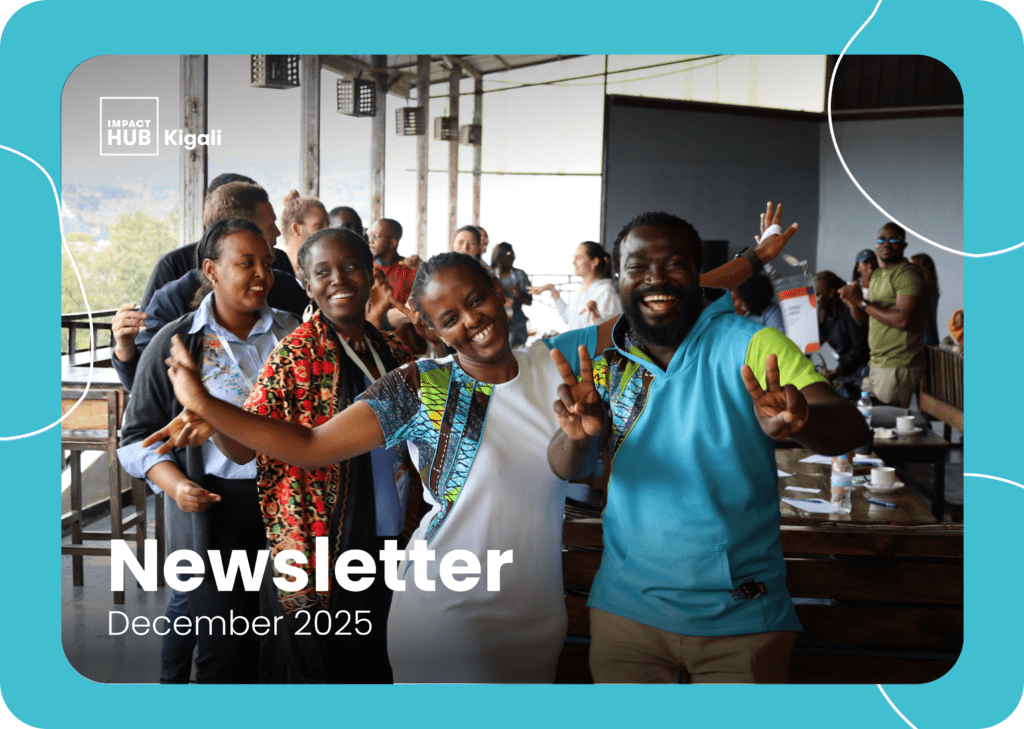
As you explore this edition, we invite you to look beyond milestones and into the patterns emerging across Rwanda’s innovation landscape. Since our October update, ventures have sharpened their business models, partners have deepened cross-sector collaboration, and new pathways to investment have continued to take shape. These shifts point to a maturing ecosystem – one that is prioritizing clarity, resilience, and long-term impact.
As you move through this update, you’ll notice glimpses of the broader story that defined 2025: the ventures that scaled, the partnerships that strengthened, and the signals shaping the road ahead. These reflections are just a preview of what’s coming next.

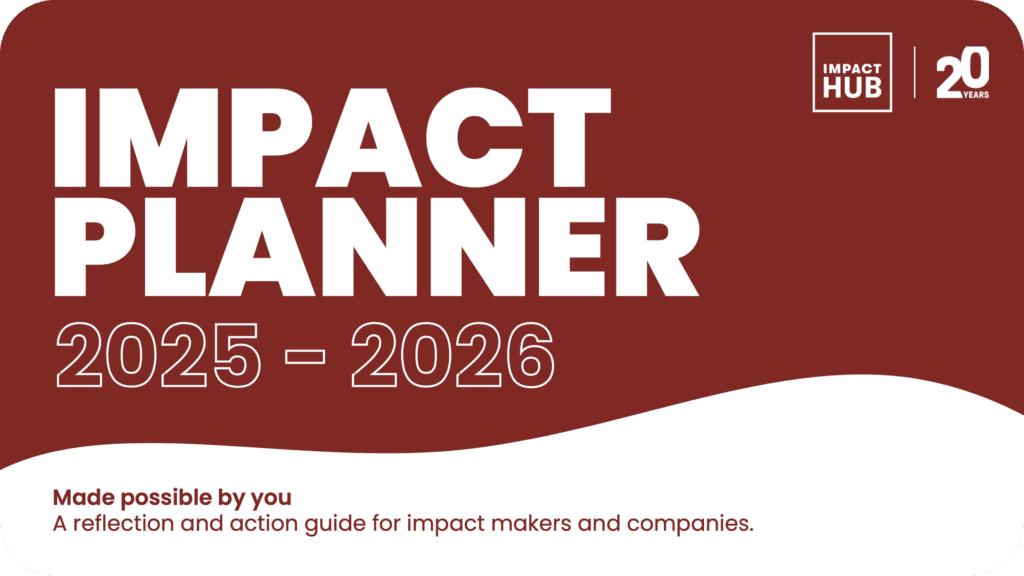
A Small Gift to Close the Year : Built for the ventures, partners, and ecosystem builders shaping the year ahead.
This is a simple, structured tool to help teams and founders reflect on what shaped their year and set clear goals for the one ahead. Whether you’re mapping out milestones, clarifying priorities, or strengthening how you track impact, we hope it offers a thoughtful space to start 2026 with intention.

If the highlights in this newsletter offer a glimpse, the Impact Report goes further – unpacking the shifts that defined 2025. From emerging sector patterns and growing investor appetite, to how founders sharpened their business models and what this says about ecosystem maturity, the report pulls these threads together into a cohesive story. It’s the closest view we’ve taken yet of the landscape we’re helping shape.
The full report comes out soon; Subscribe here to get it directly in your inbox.

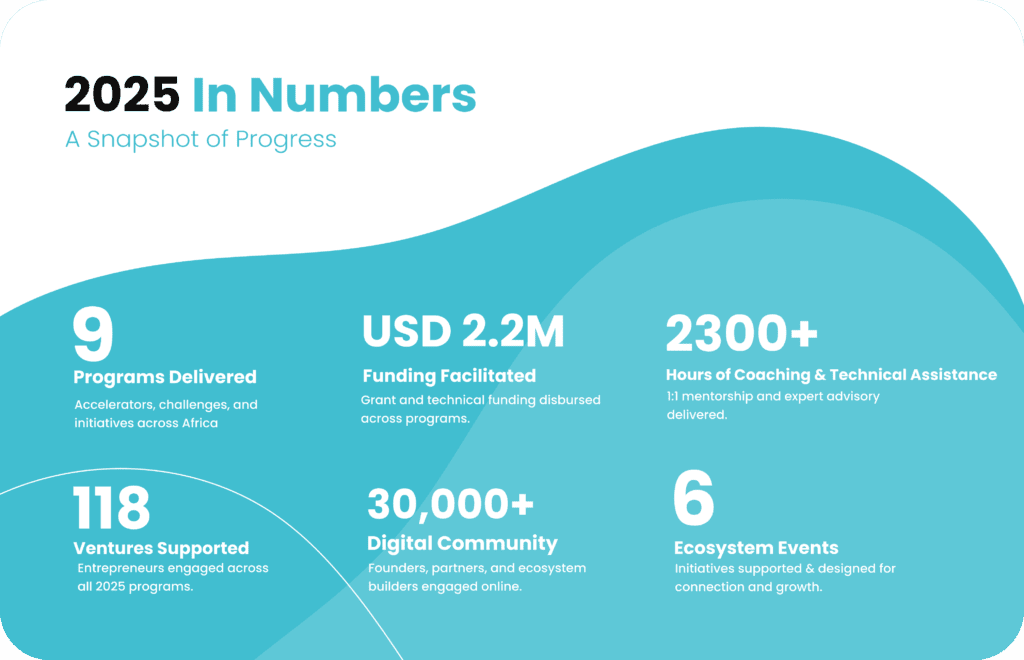
Behind every metric is a founder gaining clarity, a team refining its work, or a community coming together to build something stronger. These numbers reflect the momentum that carried 2025 – the ventures we supported, the expertise we deployed, and the collective effort that strengthened Rwanda’s innovation ecosystem. They are a snapshot of a year defined not just by activity, but by intentional, sustained impact.

Across our programmes – from agritech and circularity to drone technology and growth financing — founders are deepening their models, refining their solutions, and navigating pathways to scale with greater clarity. What we’re seeing is not just progress within individual cohorts, but a broader shift: new financing approaches, stronger technical foundations, and solutions being shaped with the realities of farmers, markets, and communities in mind.
Below is a snapshot of how this work is taking shape across each initiative.

The AgriTech4Rwanda Innovation Challenge continues to gain momentum – not only through venture progress in developing scalable, climate-resilient solutions, but also through a funding model that is reshaping how early-stage agritech ventures unlock financing in Rwanda. The Challenge introduced an interest-free recoverable grant mechanism – an innovative financing approach within Rwanda’s early-stage agritech ecosystem – designed to provide founders with the capital they need complemented by integrated climate -risk insurance. For many ventures, this marks their first encounter with financing that combines flexibility with rigor, a bridge between grant-funded experimentation and true investment readiness.
As we prepare to announce the top ventures moving into the Unlocking Capital for Climate-Smart Agriculture stage, the excitement is building. This year’s AgriTech4Rwanda cohort reflects a growing appetite for solutions that make Rwanda’s agrifood systems smarter, more resilient, and more data-driven. Until then, you can explore the full venture lineup in the AgriTech4Rwanda Dealbook, and revisit the programme’s vision through this short overview video.
Stay tuned – the next chapter is just as exciting


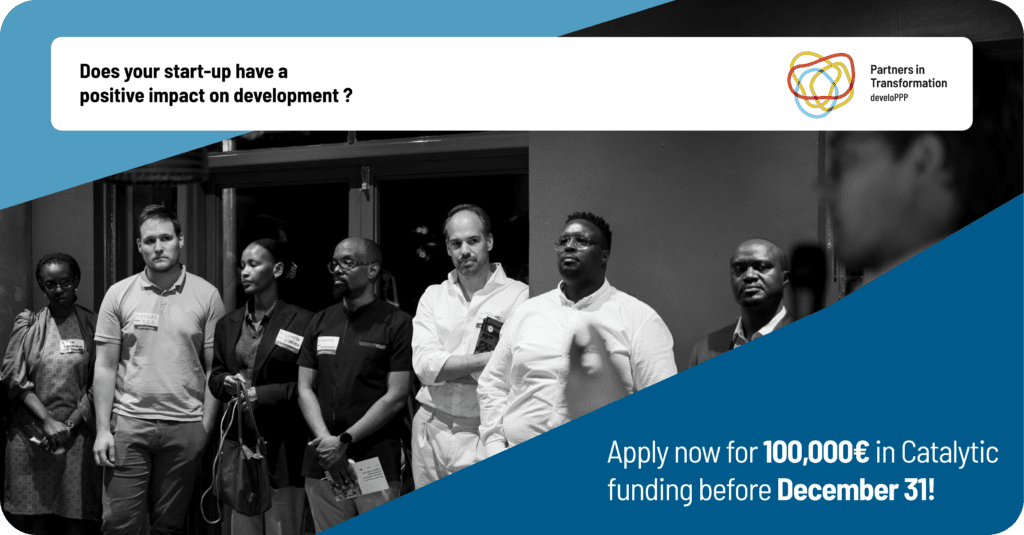
This quarter has been particularly active for develoPPP Ventures, with four cohorts advancing in parallel. Cohorts 7 and 8 continue through tailored technical assistance focused on strengthening financial models, improving g operational systems, and reinforcing the discipline required for future investment. Cohort 9 is moving toward Investment Committee review, positioning selected ventures to access EUR 100,000 in catalytic, non-dilutive funding.
Simultaneously, Rwanda’s 4th Cohort (and the programme’s 10th cohort regionally) has officially launched, underscoring the growing relevance of this unique financing instrument within the ecosystem, with 14 Rwandan ventures already in the programme’s portfolio, the impact is increasingly visible: stronger business foundations, clearer growth trajectories , and a more mature pipeline capable of absorbing and deploying capital effectively.
Applications for the current call are open. Founders ready to scale are encouraged to apply here.

As the Generation Africa Fellowship Program draws to a close, this year’s cohort leaves behind more than strengthened business models – they leave a footprint across Africa’s food systems. Over the past six months, fellows from 15 countries have grown their ventures through tailored coaching, leadership development and investment readiness masterclasses, and deep peer learning, emerging as the next generation of agrifood innovators ready to influence real systems change. And while the programme comes to an end, its impact is already visible: strengthened value chains, empowered women farmers, digital innovations brought to market, restored land, and improved livelihoods for smallholder farmers across the continent, as captured in their collective metrics.
These results are only a glimpse. The upcoming Impact Stories will offer a closer look at the founders behind these numbers – their achievements, their challenges, and the new possibilities they are unlocking across Africa. Each story is a reminder that supporting agripreneurs is not just about growing ventures, but about shaping a more resilient, inclusive food future. Stay tuned as we prepare to share this collection.

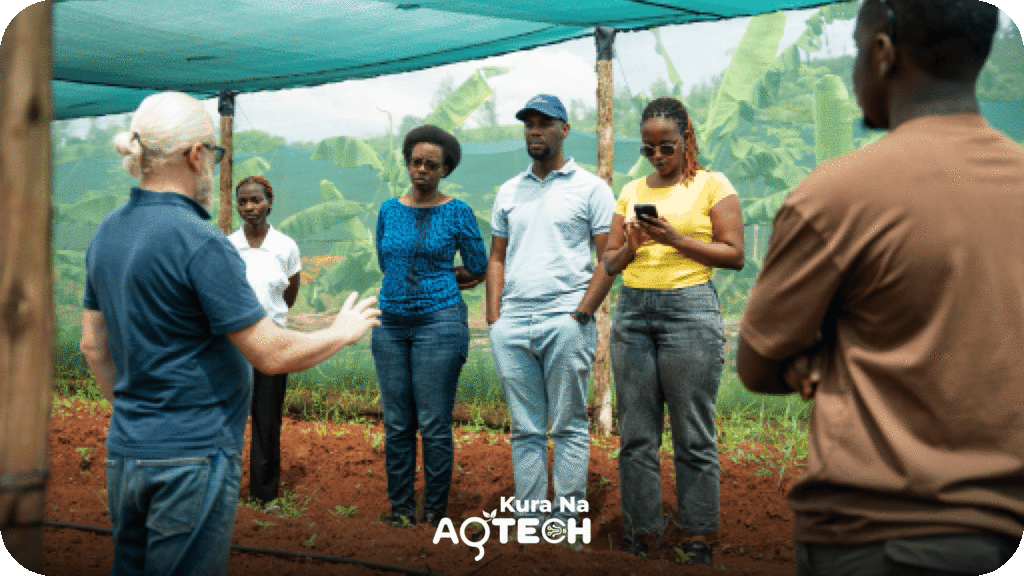
Over the past months, the Kura Na AgTech cohort has made significant progress in their acceleration journey — pairing financial and technical support with real-world feedback from farmers. Through field visits across the country, our team and experts engaged directly with Loopa, Kumva Insights, and Mulika Farms to better understand how their solutions function and how they have evolved in the framework of the program: from data-driven agritech solutions using IoT sensors and regenerative fertilizer production to digitally enabled market access systems for smallholder farmers. These agritech startups are running pilots and strengthening their business models through their acceleration packages, accessing +100 hours of tailored technical assistance across areas such as marketing, business development, financial modelling, software development and supply chain optimization, combined with masterclasses in impact measurement, investment readiness and leadership development, and funding grants.
What’s emerging is clear: when agritech ventures build for and with farmers, solutions are more relevant and resilient, adoption and use are sustained over the long-term , and impact becomes tangible at the ground level. As the cohort continues through the acceleration journey, we’ll be spotlighting how each venture evolves — and the ripple effects their innovations are creating across Rwanda’s agri-food system.

The civil drone landscape in Africa is evolving fast, and this year’s Innovate Africa Challenge has offered a front-row view of that shift – from drones once seen primarily through a security lens to locally built tools driving sustainability, precision, and resilience across the continent. Following a highly competitive ideation phase, the top five innovators have now been selected to enter the Incubation stage, where their solutions will be strengthened through deeper technical and business support. This cohort – Acre Insights (Kenya), Cradle (Rwanda), JPF Aerial Ops (Côte d’Ivoire), MicroMek (Malawi), and Phantom Technologies (Kenya) – reflects the promise of ‘Made in Africa’ innovation: hardware and software designed for real conditions, real constraints, and real impact.
As drones become catalysts for smarter farming, greener infrastructure, and climate-ready decision-making, the Challenge continues to demonstrate how African-led solutions can leapfrog traditional barriers and build systems that are more inclusive and more adaptive. The teams now advance toward their final pitch, where they’ll compete for €50,000 and the chance to pilot their innovations in Rwanda or Côte d’Ivoire.
Stay tuned as we follow their journey toward implementation and toward a new chapter in Africa’s drone story.

Mulika Farms, part of the Kura Na AgTech acceleration program, recently reached an exciting milestone: onboarding 280 smallholder farmers onto Version 2 of their digital platform – now equipped with a local payment gateway and an integrated Electronic Billing Machine (EBM) invoicing system. This upgrade does more than add a feature; it formalizes trade for farmers who rarely have access to digital receipts, creates traceability across the value chain, and builds the kind of financial visibility that strengthens farmer–buyer relationships.
Onboarding has been intentionally paced and inclusive. While most farmers are now using the app, a final tailored session is planned to onboard an additional group of farmers with limited smartphone access, ensuring that low-tech and offline users are not left behind. These sessions will reinforce app usage, alternative access methods, and confidence in digital transactions.
This progress was supported by targeted technical assistance on Mulika’s marketing and outreach strategy. Working closely with their coach, the team designed a localized onboarding campaign – defining clear messaging, communication materials, and dissemination channels—to effectively reach farmers in their operating districts. Mulika’s journey reflects the Kura Na AgTech approach: pairing practical support with innovation to help founders move from pilots to systems that farmers can realistically adopt and use.


As we close the year, we want to highlight the people whose leadership, coordination, creativity, and commitment make all of this work possible. Behind every venture milestone, workshop, field visit, funding cycle, story published, and partnership built is a team working quietly but intentionally across programmes, communications, finance, operations, and ecosystem development. Their roles rarely make the spotlight — but their impact sits at the heart of everything we do.
In this edition, we invite you to meet the team driving our mission forward. Their dedication, insight, and day-to-day partnership with entrepreneurs and partners are what shape the real texture of our work — the individuals who turn ambition into action, and action into impact. Meet the team.


Across Africa’s innovation landscape, opportunities move fast – new accelerators open, funding calls are announced, fellowships launch, and regional convenings bring founders and investors together. To help entrepreneurs stay ahead, we’ve created the Impact Hub Kigali Opportunity Board: a living, regularly updated collection of high-quality opportunities vetted for relevance, credibility, and potential impact.
Whether you’re looking for catalytic funding, technical support, new markets, or leadership development, the Opportunity Board brings it all into one place – making it easier to find what aligns with your venture’s journey.
Browse this month’s curated selection on our Opportunity Board.
We also share opportunities regularly through our WhatsApp Channel and Facebook Group, so you never miss a chance to apply, connect, or take part.
Sign up for our free global membership perks, incredible opportunities and monthly inspiring updates!